The connection was lost. Trying to connect again.

Prof. Rachel Thorn 🍉🇺🇦🏳️‍⚧️🏳️

@RachelThornSub@famichiki.jp View on famichiki.jp

Professor, International Manga Research Center, Kyoto Seika University; settler raised on Lenape land #translator; mother; #transgender #lesbian レイチェル・ソーン, 京都精華大学国際マンガ研究センター, 教授, マンガ研究, #翻訳者 , 子育て奮闘中のくたびれた母, #トランスジェンダー 女性, #レズビアン #日本語 OKです。#fedi22 #shojo #manga #shoujo #shōjo #comics #gender #feminism #progressive #SocialJustice #CulturalAnthropology #anthropology #LGBT #queer #少女マンガ #マンガ #漫画 #アメコミ #ジェンダー #性自認 #クィア #進歩派 #左派 #フェミニズム #男女平等 #社会主義 #文化人類学 LLM bots prohibited from my replies.

Pronouns
She/Her
Blog
rachelthorn.net Link checked on 2026-10-27
Banner
Illustration by Moto Hagio featuring characters from her comic, "The Poe Clan"
Icon/Avatar
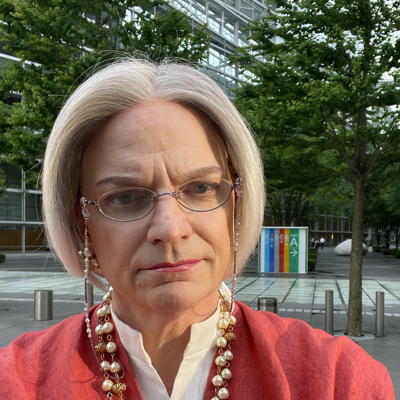
Recent selfie of me in all dressed up for a fancy party in Tokyo, looking at the viewer. I have gray hair in a bob style. Not smiling because I don’t know how to smile naturally when taking a selfie.
  • 5 posts

Although it isn't well known, the famous opening scene of "My Neighbor Totoro," showing a bird's-eye view of a truck driving along a country lane, is actually an homage to the opening sequence of Chiba's "1, 2, 3 and 4, 5, Six." The "sick mother" storyline is also featured in both works. 5/5

· Public

This was what girls like Satonaka, sick of the tear-jerker stories of girls being separated from the mothers, had been waiting for. His work was wildly popular. His portrayal of girl heroines continued to evolve through such stories as "1, 2, 3 and 4, 5, Six," "Yuki's Sun," and "Island Girl." Unfortunately, he started doing more work in boys' magazines and less in girls' magazines. His last shōjo work was "TV Angel" (1968). 4/5

· Public · edited

They drew their heroines with what I call "squirrel eyes." You could hardly see the whites of their eyes. They had big, black eyes, like cute little mammals. But starting with "The Ocean that Calls to Yuka" (1959), Chiba started drawing girls with intelligent, assertive eyes. They also behaved differently. They acted, rather than waiting for someone else to save them. 3/5

· Public · edited

It's not surprising she would think that. Up until he finished "Mama's Violin" (his first lengthy serial), he drew the way the male editors told him to, but didn't like what he was making and decided to just draw them without obsessing over the gender of the protagonist or that of the reader. He drew girls as human beings, and girls loved it. In the late 1950s, the shōjo manga drawn by men portrayed the heroine as passive, sweet, and waiting for some guy to rescue her. 2/5

· Public · edited

Manga artist CHIBA Tetsuya has passed. He was 89. I had the privilege of meeting him several times at manga-related gatherings, and he was a humble, funny guy. He's famous for such shōnen manga as ”Ashita no Joe" and "Ashita Tenki ni Naare," but his shōjo manga were groundbreaking and loved by girls back in the day. Before SATONAKA Machiko made her professional debut, she was convinced that no man could have written shōjo manga like that, and believed it was a woman using a man's pen name. 1/5

· Public · edited