
The connection was lost. Trying to connect again.

Post by Tim Bray 🇨🇦

Earlier in the thread

Tim Bray 🇨🇦 @timbray@cosocial.ca

So, check out this useful “Compare Mac Models” page (h/t @gruber). Scroll down to the “Compute” and compare the stats. Go on, do it, I’ll wait. See anything that makes you go WTF?!? I did.
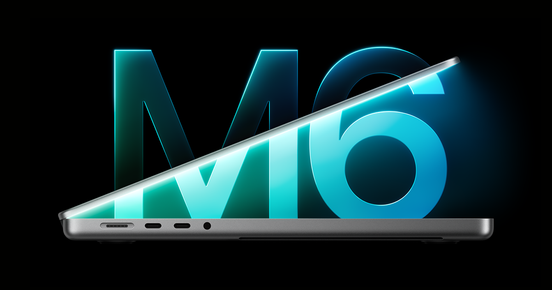
apple.com/macbook-pro/liquid-r

#macOS #apple

Apple Compare MacBook Pro Models Compare the MacBook Pro models with other Mac laptops and desktops. And find the one that’s perfect for your life, your work, and your budget.


· Public · edited

Tim Bray 🇨🇦 @timbray@cosocial.ca
Spoiler

2/ It’s the Memory Bandwidth numbers, “Up to 170 GB/s” for the M6, “Up to 614 GB/sec” for the M5 Max/Pro models. This is a big deal? Computers pull data from memory into the CPU, crunch it, write it back out. But they can crunch many times faster than the memory can deliver it. So the effective performance depends a *lot* on memory bandwidth.

· Public

Tim Bray 🇨🇦 @timbray@cosocial.ca
Spoiler

3/ The kind of heavy-duty work these things are designed for (LLMs, big-video, etc) all tend to work with huge blobs of data, so in many cases the memory bandwidth is the limiting factor. Old programmer mantra: “All computers wait for data at the same speed.”

· Public · edited

John Francis 🇨🇦🦫🍁🫎 @johnefrancis@cosocial.ca

@timbray the M6 is inferior in almost everything, but it's also half the price of the M5 Max...

I think the 6 stands for "2026"

· Public

Replies

John Siracusa @siracusa@mastodon.social

@timbray Rumor (and reality, so far) is that M6 will be the ONLY “6”-series M chip, so no M6 Pro, M6 Max, and M6 Ultra. Apple is skipping straight to the M7 generation.

(Also, the M4 series never had an “Ultra” chip.)

So, a plain M6 is much smaller/weaker than an M5 Pro, let alone an M5 Max or Ultra.

But the M6 does have 2x the “Neural engines” of the M5 Pro and M5 Max, so it might be able to win a very specifically designed benchmark on that.

· Public

John Siracusa @siracusa@mastodon.social

@timbray Apple’s ”M” chips come in multiple sizes for (most) generations. (Replace n with 1-6.)

* Mn - The plain, no-suffix M chip. This is the smallest and cheapest, with the narrowest busses and the least cores, etc.

* Mn Pro - The next size up: more cores, wider busses, more PCIe lanes, etc.

* Mn Max - The biggest “single chip” M chip (though the M5 Max does use separate CPU and GPU dies now).

* Mn Ultra - Two Mn Max chips stuck together, so double everything the Max has.

· Public